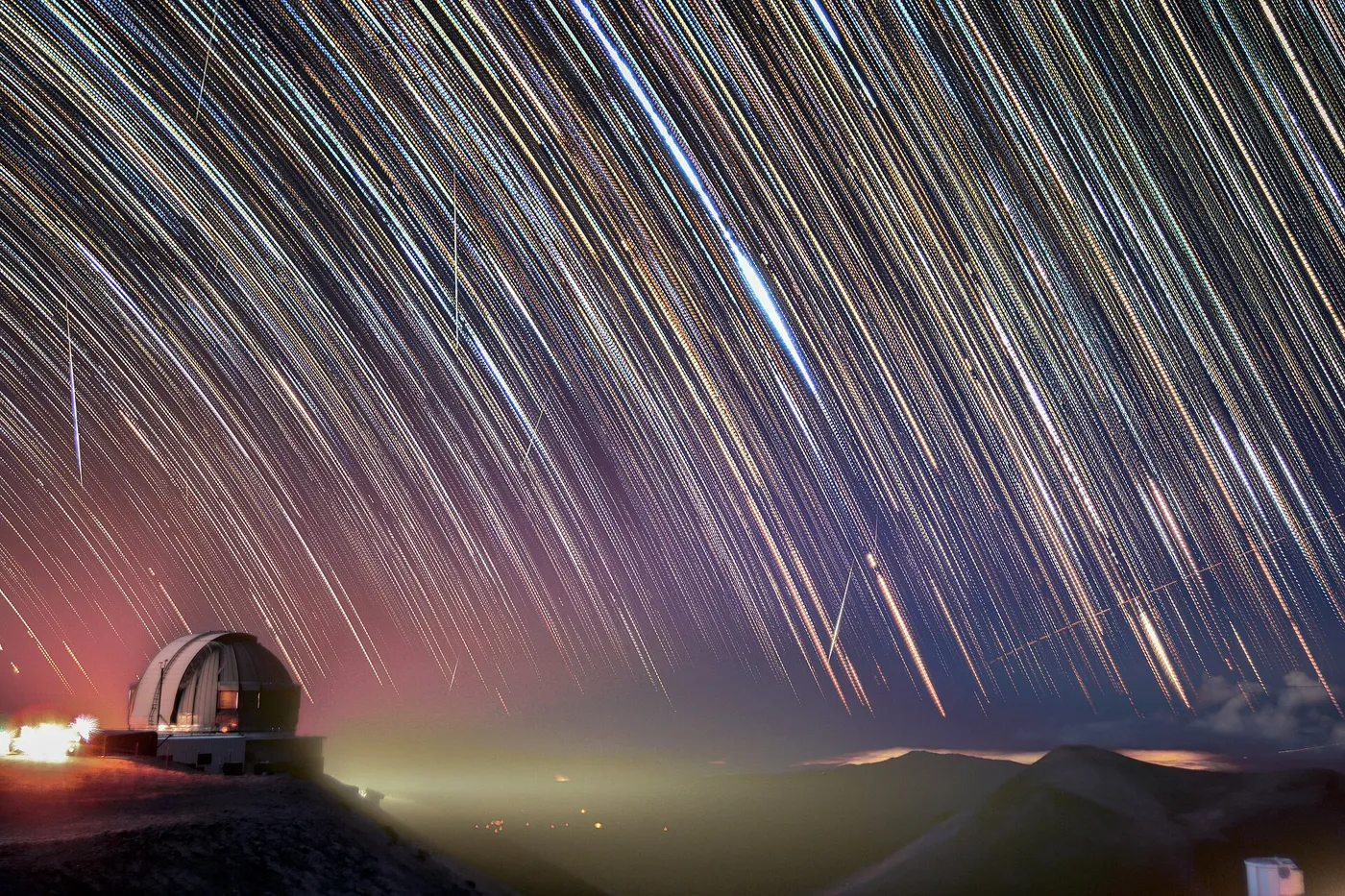
Dec 14 Geminid Meteor Shower! Peak at 22:00
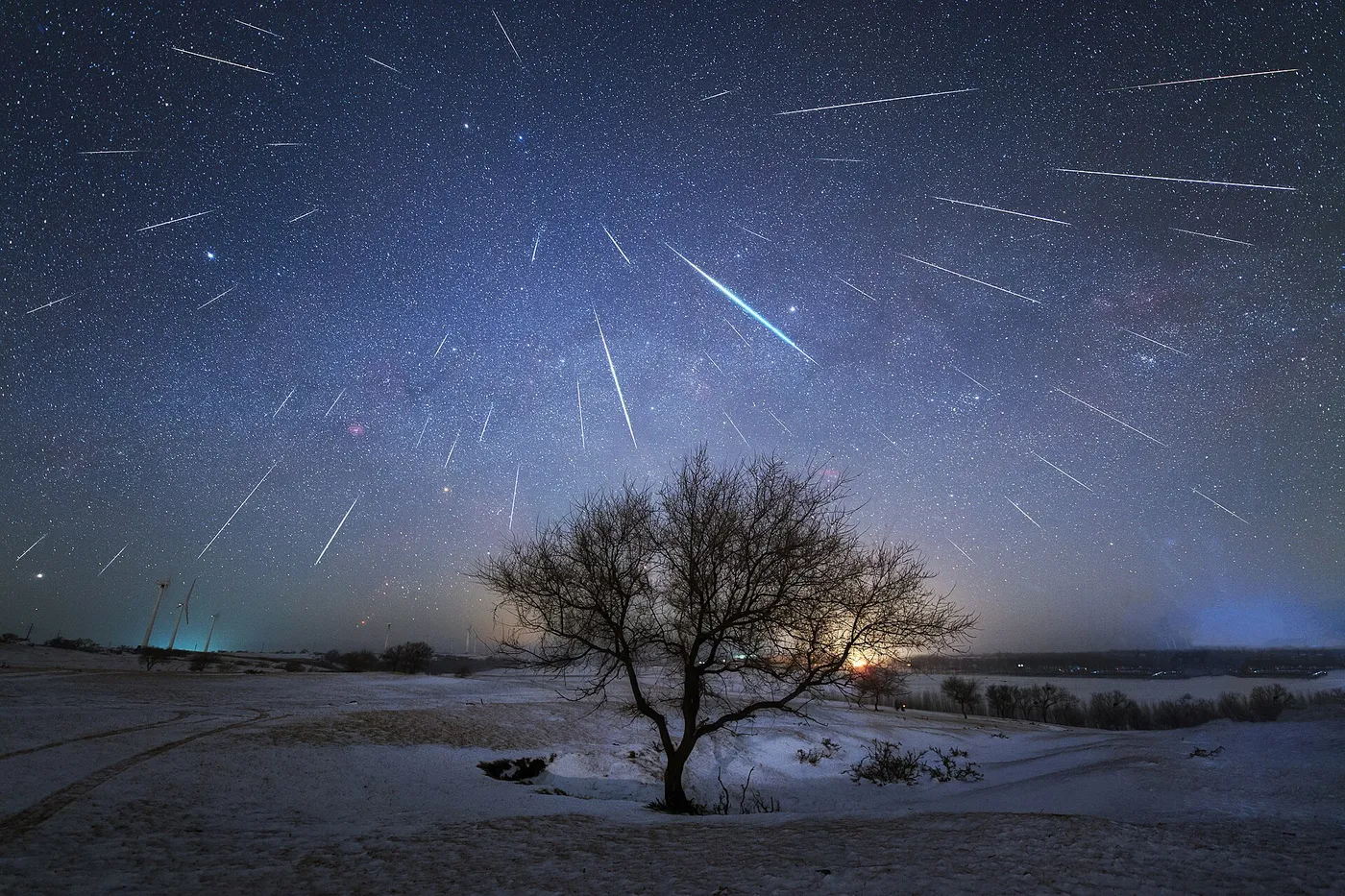
From Yangmingshan's Qingtiangang in Taipei to Nantou's Hehuanshan Dark Sky Park, the peak arrives at 22:00 on Dec 14, with a ZHR of about 150.
From spots near Taipei like Yangmingshan's Qingtiangang (擎天崗) and Mt. Datun (大屯山), to Nantou's Hehuanshan Dark Sky Park (合歡山暗空公園), these are all great stargazing spots for the Geminid meteor shower. As one of the three major meteor showers of the year, the Geminids' 2026 peak is on December 14 at 22:00, with no moonlight interference, leaving the night sky to the streaking trails of light.
By Su Yi-ChenDETOUR EDIT's events and exhibition guide editor. I organize the information first, then use visuals to bring readers into the scene.
Timeline for the night
The radiant point rises from the east at 19:00, and the best viewing time lasts until dawn. The closer to midnight, the more meteors you're likely to see.
- START19:00Radiant Rises
- 01After darkLook to the east
- 0222:00Dec 14 Peak
- 03MidnightMore meteors closer to midnight
- GOALBefore dawnBest viewing period ends
The peak is an estimated time; the sky is still worth watching a day or two before and after.
Check before you go
No moonlight interference. A clear sky is what makes the night.
- Lunar AgeOn Dec 14, the lunar age is 5.5, making for good viewing conditions. The year's biggest full moon is on Dec 24, 10 days later.
- ZHRAround 150. This is an ideal number when the radiant is at its zenith and the limiting magnitude is 6.5; the actual number of meteors seen will be lower.
- Active PeriodEarly to mid-December.
- WeatherYou won't see anything if it's cloudy. Check the weather forecast before you head out.
What to know first?
Peak|ZHR up to 150
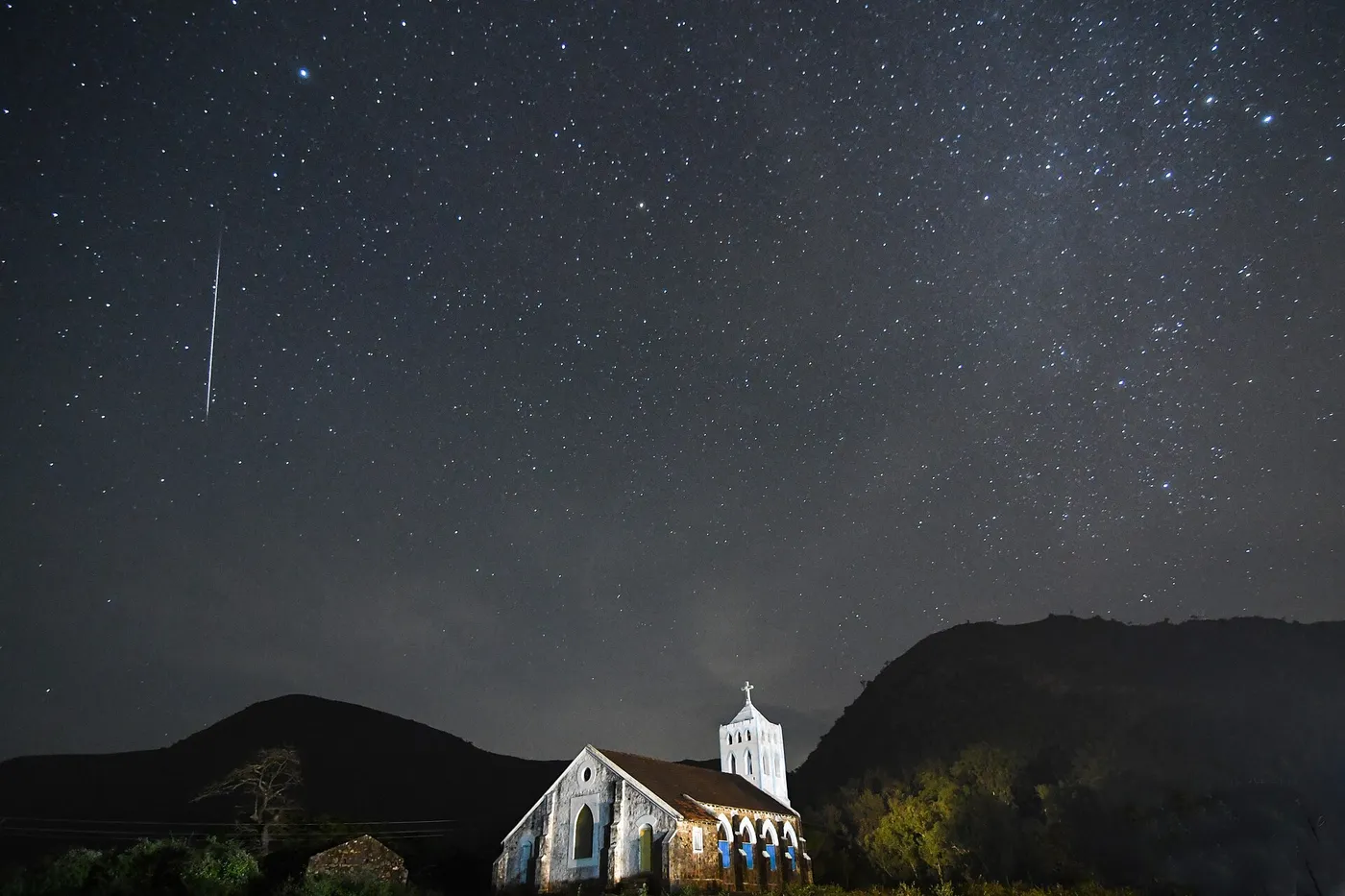
The peak is predicted for 22:00 on December 14, with a ZHR of up to 150. The days before and after are also worth watching. With no moonlight to steal the show, the night sky becomes a stage for intersecting meteor trails.
Dec 14 (Mon) 22:00
- Dec 14 (Mon) 22:00
- ZHR approx. 150
- Lunar age 5.5, good conditions
- Peak
- The 2026 Geminid meteor shower is predicted to peak at 22:00 on December 14. The lunar age on that day is 5.5, making for good viewing conditions.
- ZHR
- ZHR refers to the hourly rate of meteors under optimal conditions, with the radiant at the zenith and a limiting magnitude of 6.5. The actual number seen will be lower.
- Active Period
- Early to mid-December
- Moonlight
- The Geminid meteor shower in mid-December is less affected by moonlight.
Direction|Look east after dark
The radiant point is located in the head of the Gemini constellation and rises around 19:00. After dark, look to the east. The closer it gets to midnight, the more meteors you're likely to see. As the night deepens, the starry sky gradually comes alive.
More meteors closer to midnight
- Radiant rises at 19:00
- Look to the east
- More meteors later at night
- Radiant Point
- Located in the head of the Gemini constellation, rises around 19:00.
- Direction
- Look to the east after dark. The closer to midnight, the more meteors you're likely to see.
- Time
- The best viewing period is from when the radiant rises until dawn.
Location|Qingtiangang and Hehuanshan
Near Taipei, you can go up to Yangmingshan's Qingtiangang or Mt. Datun. There's less light pollution at night, so you can just lie down and gaze at the star-filled sky. For an even darker sky, Nantou's Hehuanshan is Taiwan's first International Dark Sky Park, where the Yuanfeng observation deck lets the mountain ridges and starry sky meet in the darkness.
Gaze up at the sky just outside Taipei
- Qingtiangang has less light pollution
- Hehuanshan Dark Sky Park
- No telescope needed
- Near Taipei
- Yangmingshan's Qingtiangang, Mt. Datun, and Mt. Qixing are all stargazing spots mentioned by the Yangmingshan National Park Headquarters. The park's parking lots are open 24/7. Mountain trails are not lit at night, so it's recommended to leave them before sunset.
- Night Visit Etiquette
- The Park Headquarters reminds visitors to Qingtiangang at night to keep their voices down, avoid using bright lights, not play music, and take their trash with them.
- Hehuanshan Dark Sky Park
- Certified by the IDA in 2019, the park covers the area from the 22.1 km to 27.5 km mark on Provincial Highway 14A (around Yuanfeng). It features the Yuanfeng observation deck. Car headlights must be turned off within 3 minutes of parking, and flashlights must be under 500 lumens. Violations are subject to fines.
- Taoyuan Lalashan
- Certified on November 9, 2026, it is Taiwan's first 'Urban Night Sky Place'.
- How to Watch
- No telescope needed. Lie down and look up at the whole sky. Avoid cities, their surrounding areas, and the coast. Use a small red light and don't use flash.
Find a patch of sky with little light pollution, lie down, and let's wait for the Geminids to streak across the night sky!
3 things before you head out
- December 14th is a Monday: The peak is at 22:00 on Monday night, but it's also worth taking a look on Sunday night.
- Check the weather before you go: You won't see anything if it's too cloudy, so check the weather forecast before you head out.
- It's cold up in the mountains: Night temperatures are low at Qingtiangang(擎天崗) and Hehuanshan(合歡山), so remember to bring warm clothing. There are also traffic restrictions on Hehuanshan when it snows.
Fact-checked on 2026-11-18. Peak time, ZHR, moon age, radiant point, and viewing recommendations are from the Taipei Astronomical Museum's(臺北市立天文科學教育館) '2026 Major Astronomical Events' and 'Annual Major Meteor Showers' (checked 2026-11-18). The two sources from the museum list different end dates for the active period (12/17, 12/20). Stargazing locations are from the Yangmingshan National Park(陽明山國家公園) Headquarters (Qingtiangang, Datunshan(大屯山), Qixingshan(七星山)), the Nantou County(南投縣) Government's Hehuanshan Dark Sky Park page and self-governing ordinance (amended 114-02-05), and DarkSky International (Hehuanshan, Lalashan(拉拉山)) (additional check on 2026-11-20). Sources: Taipei Astronomical Museum | Table of Major Astronomical Events、Taipei Astronomical Museum | 2026 Major Astronomical Events (Taipei Starry Sky)、Taipei Astronomical Museum | Annual Major Meteor Showers、Yangmingshan National Park | Stargazing at Qingtiangang、Yangmingshan National Park | Stargazing at Datunshan、Nantou County | Hehuanshan Dark Sky Park、Nantou County Hehuanshan Dark Sky Park Management Self-Governing Ordinance、DarkSky International | Hehuanshan. Photo copyrights belong to the original creators; credits appear below each photo.