Green or White Sulfur Springs in Beitou: Which to Choose?What's the Difference Besides Color?
A comparison of the two spring types' pH levels, and how water temperature and skin condition can affect your soaking experience.
By Hsu Chih-Hsia
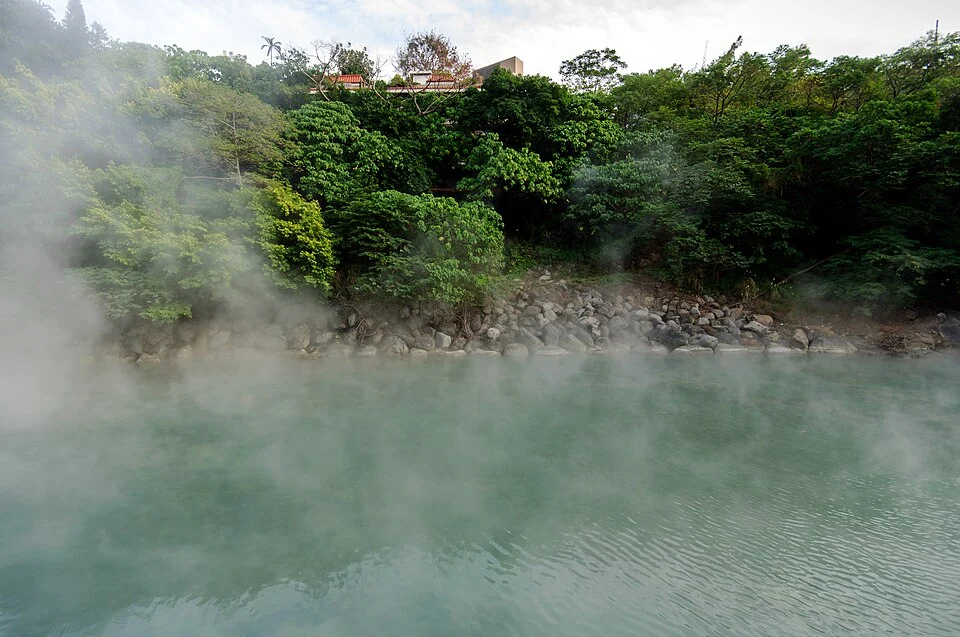
In Beitou, green sulfur springs are clear with a green tint, while white sulfur springs are often a milky yellowish-white. When choosing a bathhouse, it's more important to ask about the pH level and water temperature. According to data from the Taipei Water Department, green sulfur springs have a pH of around 1–2, and white sulfur springs are around pH 3–5. Both are acidic, with green sulfur being more so. This is the official data, but it's a good idea to ask the establishment about the actual water quality and temperature of their baths before you book. Taipei Water Department's explanation of spring types
Green or White Sulfur: How to Choose?Swipe left/right
Which difference do you want to know about first?
- Thermal Valley
- Naturally springs from the valley floor
- Green Sulfur Spring
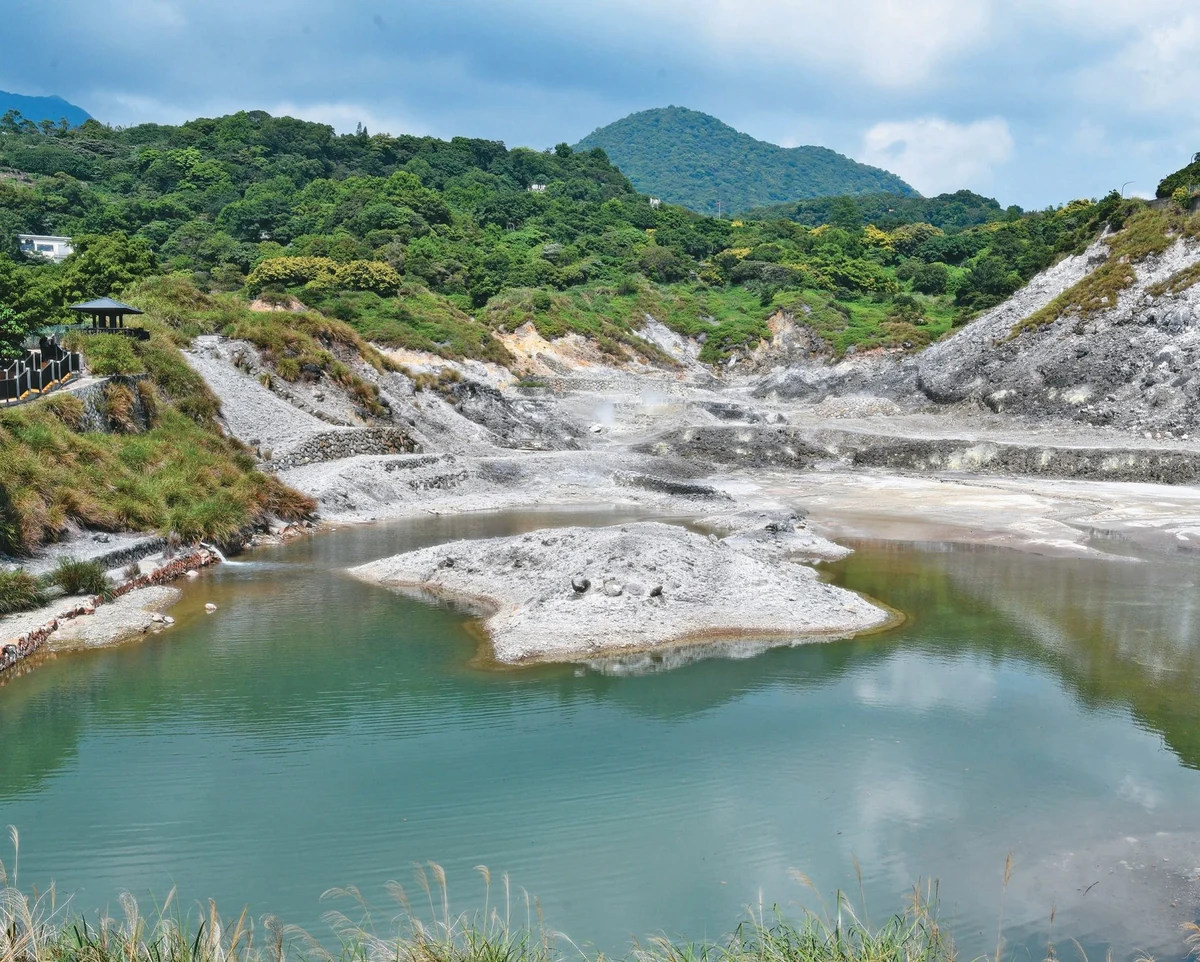
- Geothermal heat is drawn from the Sulfur Valley source area
- Fresh water is heated in a mixing well
- White Sulfur Spring
Green sulfur is more acidic, but white sulfur is acidic too
Green sulfur is around pH 1–2, while white sulfur is around pH 3–5.
- Green sulfur: pH ~1–2
- White sulfur: pH ~3–5
- Both are acidic
The green sulfur spring from Thermal Valley is a natural spring, classified as an acid sulfate-chloride spring, and is clear with a green tint. The white sulfur spring supplied by the water department is created by using geothermal heat from the Sulfur Valley source area to heat fresh water in a mixing well, resulting in an acid sulfate spring with a sulfurous smell. Taipei Water Department's explanation of spring types
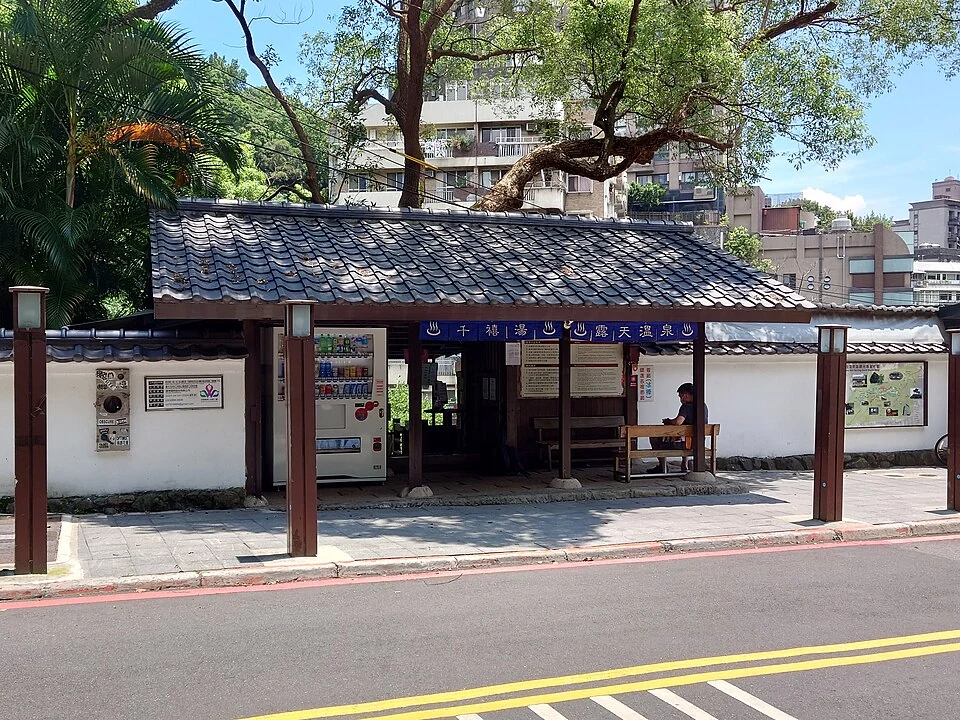
If my skin gets dry and itchy easily, does it matter which one I choose?
Water that is too acidic or too hot can irritate the skin.
- Watch out for stinging
- Water that's too hot can be more drying
- Avoid hot springs during a dermatitis flare-up
Assuming similar water temperature, soaking time, and skin condition, the more acidic spring might be more likely to cause a stinging sensation. Whether it actually stings depends on the bath's water quality and your personal reaction. White sulfur is still an acidic sulfur spring and can also cause irritation. The dermatology department at Kaohsiung Medical University Hospital advises that water that's too hot can dry out the skin. If you have open wounds or are having a flare-up of a skin condition like eczema, you should avoid hot springs until your condition stabilizes and a doctor says it's okay. KMUH Dermatology's "How to Enjoy a Good Hot Spring Bath?"
Some studies have explored the effects of specific acidic hot springs on skin diseases, but there isn't enough information currently to determine whether Beitou's green or white sulfur springs are better for improving eczema or other skin conditions. Both are fine options for a recreational soak. When choosing, base your decision on the actual water temperature, quality, and how it feels to you. Research on Kusatsu's acidic hot springs · Hot spring bathing guide from KMUH Dermatology
Before booking a bathhouse, ask about the spring type and water temperature
Ask about the actual water quality and temperature of the bath first.
If you want to try a less acidic spring, you can ask for a white sulfur bath. If your skin is prone to dryness and itching, it's more important to choose a pool with a temperature slightly above body temperature for a short soak, rather than focusing on the water's color. Taipei City's hot spring guidelines recommend soaking for no more than 10–15 minutes at a time. If you feel any stinging or burning, get out of the water immediately and rinse with fresh water. After your bath, you can also rinse off any remaining spring water and avoid rubbing your skin. Taipei City Hot Spring Bathing Guidelines · Hot spring bathing guide from KMUH Dermatology
Expand Green vs. White Sulfur Comparison
| Comparison | Green Sulfur | White Sulfur |
|---|---|---|
| pH (per Water Dept.) | ~1–2 | ~3–5 |
| Spring Type | Acid sulfate-chloride spring | Acid sulfate spring |
| What to watch for | Higher acidity, watch for stinging | Still acidic, can also be irritating |
Read next


Sources Taipei Water Department's explanation of spring types · Hot spring bathing guide from KMUH Dermatology · Research on Kusatsu's acidic hot springs · Taipei City Hot Spring Bathing Guidelines